Showing posts with label corner view. Show all posts

Thursday, March 15, 2012

Corner View - Everyday


Every day there is Hope.

Last summer, as I was driving around the United States, I came across a sign for Hope. So I turned off the interstate and found Hope - Hope, Arkansas, the home town of Bill Clinton, and everyday small town America.

Wednesday, March 7, 2012

Corner View - Monuments


The Giles Statue, Ipswich


The Monument to the Women of Word War II, Whitehall, London


England is full of old monuments but I thought I'd show you a couple of quirky newer ones that I particularly like.

The Giles Statue in Ipswich was erected in 1993 to commemorate the cartoonist Carl Giles, who used to live there. It depicts one of his most famous cartoon characters, Grandma.

The Monument to the Women of World War II was sculpted by John Mills and unveiled by Queen Elizabeth II, in 2005, to commemorate the 60th anniversary of the end of the Second World War. It shows 17 sets of uniforms and clothing representing the various roles of women during the war.


Wednesday, April 6, 2011

Corner View - Time


The city of Cambridge has 19 sundials. There is even a book about them, 'Cambridge Sundials' by Alexis Brookes & Margaret Stanier, and a Cambridge Sundial Trail which you can walk around. This one, which has six faces, is above the Gate of Honour at Gonville & Caius College.

The obelisks of ancient Egypt from 3500 BC onwards were the first type of sundial, and the first instruments for telling the time. The Old Testament ( Isaiah 38:8 and II Kings 20:11) also describes a sundial, the Dial of Ahaz, from around 700 BC.

Sundials often have a motto inscribed beneath them:

'Let others tell of storms and showers; I mark only the sunny hours'

'Mach' es wie die Sonnenuhr: zähl' die heitren Stunden nur!' (Do like a sundial and count only the sunny hours!)


Tuesday, March 29, 2011

Corner View - Reflections

Courtyard of Umayyad Mosque, Damascus

Apartment block reflected in office block windows, Bucharest

These are photos from two countries I've lived in recently: Syria and Romania. The first is of the Umayyad Mosque: one of the holiest sites in the Islamic world. It stands on the site of a 3,000-year-old Aramaean temple, referred to in the Old Testament. At the heart of it is a beautiful courtyard in which are three domed structures: the Dome of the Treasury, the Dome of the Clocks and the Ablutions Fountain. The mosque has three towering minarets: the Minaret of the Bride, the Minaret of Jesus and the Al-Gharbiyya Minaret. It is here that muslims believe Jesus will descend to earth again to save the world.

Three of the most important shrines in the Middle East are here. They are the shrines of Hussein, St. John the Baptist and Saladin. The head of Hussein the grandson of the Prophet Mohammed, was brought here after he was killed, aged 54, from the Battle of Karbala in 680 AD. The head of St John the Baptist is also enshrined here, beneath a dome. This is reputedly the same head that was presented to Salome on a platter. Although Saladin, the most famous muslim general in the battles of the Crusades, was a Kurd born in Tikrit, he died in Damascus in 1193, and is buried here. I must say that it is quite an experience to see the tombs of three such famous historical figures in such close proximity.

22 years ago, Romania experienced what Syria is experiencing now: a revolution. What you see there today is the legacy of the past - the grim apartment blocks and grey ministry buildings - combined with architectural visions of the future.


Tuesday, March 8, 2011

Corner View - Wood

The wooden kampung house I lived in at the edge of the South China Sea, Terengganu

Wooden houses, Istanbul


Gol Stav wooden church, Norway


A wooden water wheel, Suwon, South Korea

Wednesday, February 23, 2011

Wednesday, February 2, 2011

Wednesday, January 26, 2011

Corner View - My Favourite Artists

Edward Hopper (1882-1967)

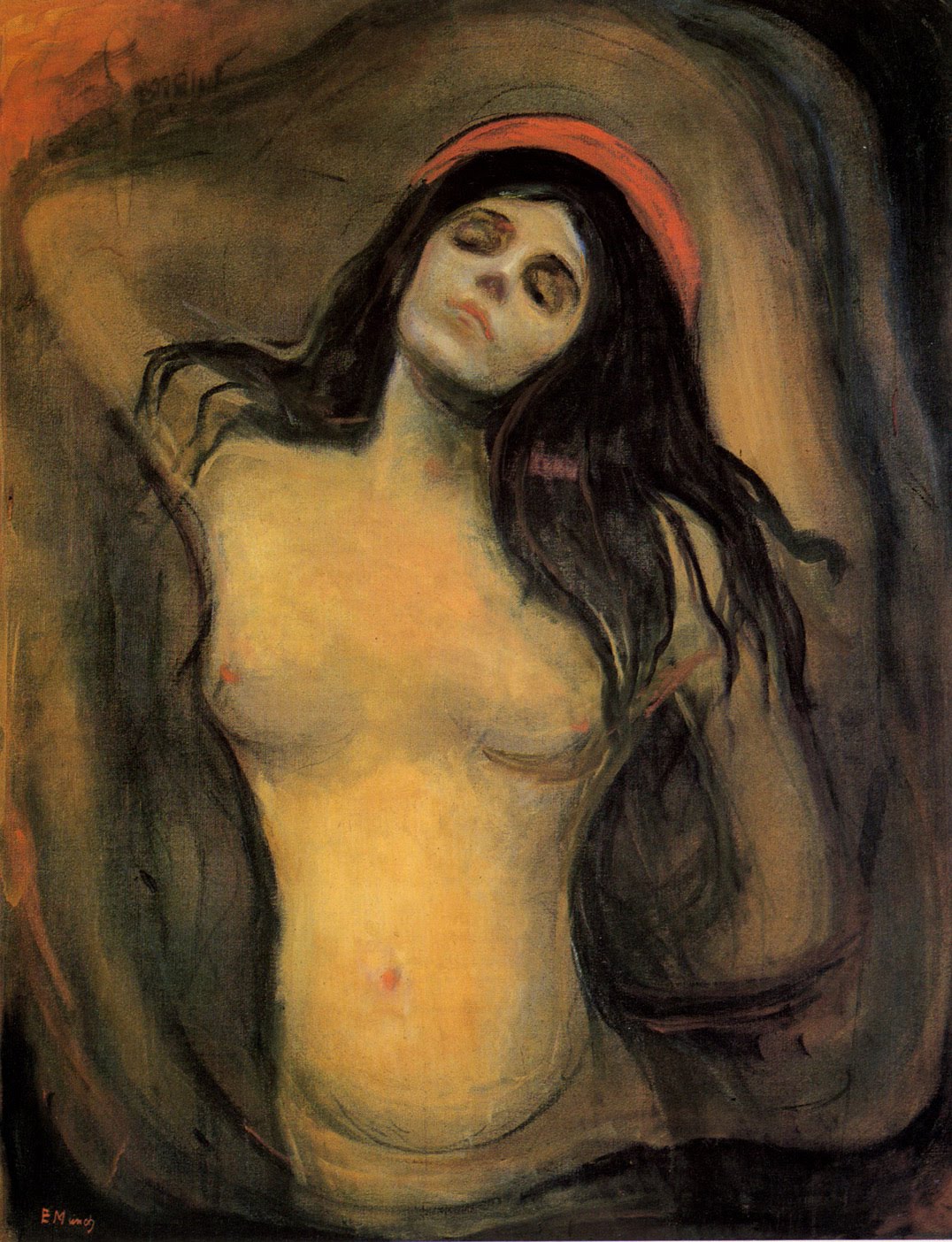
Edvard Munch (1863-1944)

Pieter de Hooch (1629-1684)

Amadeo Modigliani (1884-1920)

Richard Hamilton (1922-)

Katsushika Hokusai (1760-1849)

Diego Velazquez (1599-1660)

Wednesday, January 19, 2011

Corner View - Organic Form


This week's theme, Organic Form, comes from Nadine.

The henna art and wall murals of Zanzibar, both, to my eyes, have organic forms and colours which grow naturally out of the earth.

Wednesday, January 12, 2011

Corner View - Winter


Winter here in Salalah is a bit like spring in most other parts of the world. It is pleasantly warm and sunny, wih daytime highs of around 26°C and nighttime lows of 19°C. In fact, it's an ideal time for planting seeds. My New Year's resolution was to make a herb garden, and it's now well under way. Seeds only take a few days to germinate here, and I'm now beginning to transplant some of the seedlings to the earth. They include coriander, basil, parsley, thyme, dill, chives, celery, lemon grass and chili peppers. Most of the plants should be ready to pick some time in March or April, when the temperatures will be up in the 30°s, and it will be getting a little too hot for planting seedlings.

Whilst I was out in the garden I heard the plaintive cries of a two-week old kitten, which had been left on our roof by its mother. We really had to get him down, as he sounded quite distressed. He's got one wonky ear, but he's cleaned up quite well and is happily taking baby formula from an ear dropper. His name is Fred. Our other cat, Sid, who I also found abandoned, is a little bit jealous of him though. Every time he sees the kitten, he walks off in a huff, and only deigns to come home again when he's hungry.

Tuesday, December 14, 2010

Corner View - Traditions


Most traditions, including Christmas, are related to the scapegoat mechanism, which is at the root of all human behaviour. Although it was Kenneth Burke who discovered what had been lying in wait for us for so many centuries, it was René Girard who first really understood its significance. In order for humans to bond and operate effectively, we need to isolate a scapegoat and kill or punish him/her/it ruthlessly, be it a goat, a sheep, a turkey or a fellow human being.

The top photo is of the Temple of Baal at Baalbeck in Lebanon, possibly the most monumental building ever constructed by man, and the greatest temple ever to the cult of scapegoatism. Human sacrifice took place there on a massive scale.


When I was there in the summer of 2006, two Israeli soldiers, who'd just been captured, were being held in an adjacent building, and were about to be sacrificed. One thousand other people were killed in the war to rescue them. There is no blame, only human tradition. There have always been scapegoats. Sometimes we nail them to crosses, sometimes we burn them on bonfires, sometimes we make effigies of them and beat them to death, sometimes we bully them at school, sometimes we have commissions to weed them out, sometimes we gas them in concentration camps. We usually laugh about it at the time: it is our way and our tradition. In the part of the world I live in, the greatest tradition is to kill a goat: the scapegoat.


Wednesday, December 8, 2010

Corner View - Improvising


You will find this picture inside almost every home, shop and temple in Bhutan. It illustrates the story of Thuenpa puen shi, or the Four Cooperative Friends. The story tells how four very different creatures, an elephant, a monkey, a rabbit and a peacock, combined to find food. The peacock found the seed, the rabbit watered it, the monkey fertilised it, and the elephant guarded it. The problem was that the tree grew too high for any one of them to pick the fruit. So, they stood on each other's backs in order to reach it (obviously, the elephant was not on top). The Bhutanese are officially the happiest people in the world. Maybe this story helps to explain why.

Whilst you will find the Four Cooperative Friends inside, on the outside walls of their shops and houses the Bhutanese have painted a very different picture: it is of a giant penis with a ribbon tied round it. Whether this also has something to do with them being so happy, I really don't know.

Tuesday, November 30, 2010

Corner View - Rain


Photos:

1) On a mountain road from Kandy, Sri Lanka

2) The Darjeeling railway in the monsoon

3) Small town in Sikkim

Wednesday, November 24, 2010

Corner View - Taking a Different Perspective


In north-west Syria, about halfway between the Turkish city of Hatay (Ancient Antioch), where the Christian religion was founded, and Aleppo, home of the Great Mosque, where you can see the head of Zachariah, King of Israel and father of St. John the Baptist, you will come across a large stone boulder surrounded by the ruins of a vast cathedral. This rock on a pedestal is all that remains of an eighteen-metre high stone pillar that a man, who at the end of the fourth century was one of the most famous in the world, lived on top of for thirty-seven years. This still stands as the longest endurance record in the Guinness Book of World Records.

Simon Stylites, or Saint Simeon, was, like so many men at that time, the son of a shepherd, who gazed skywards looking for answers. At first he entered a monastery, where he subjected himself to increasingly extreme fasting and ever more masochistic self-abasement. When it was discovered that he had bound his waist so tightly with palm fronds that it took days of soaking to remove the fibres from the festering wound, he was asked to leave the monastery.

At first he imprisoned himself for one and a half years in a tiny hut on a rocky ledge, where he passed the whole of Lent without eating or drinking, a feat hailed as a miracle. When he emerged, he stood upright as long as his limbs could sustain him. One day he discovered a stone column left by the Romans and decided to stand on top of it. This first pillar was only four metres high, but Simeon sought out ever higher columns until eventually he discovered the eighteen-metre high one on top of which he was to spend the rest of his life. His fame spread throughout the western world and thousands of pilgrims from as far away as England and Ethiopia started trekking towards this stone pillar to stare up in wonder at Simon Stylites. Simeon eventually died on September 2, 459 AD, and the great cities of the Byzantine world, including Constantinople and Antioch, fought for the privelege of being his final resting place. Antioch prevailed.

A great basilica was built around Simeon's pillar which fanatical pilgrims chipped away at until it was reduced to the two-metre stump you see today. Simon Stylites spawned imitators and soon there were hundreds of stylites standing on pillars across the Middle East and Europe. In the early twentieth century the practice of pole-sitting was revived in America by poor people and showmen, desperate for a little fame and the money that went with it. In Baltimore, in 1929, twenty children sat on top of eighteen-foot hickory poles, cheered on by their families, while in Atlantic City, in the same year, Alvin 'Shipwreck' Kelly, a showground boxer brought up in an orphanage in Hell's Kitchen, who'd been sitting on poles, on and off, since 1924, set a modern record by sitting on top of a flagpole for 49 days.

The Roman Catholic Feast Day of St Simeon Stylites is celebrated on January 5th each year. In 1965 a film based on his life, Simón del Desierto, was made by Luis Buñuel, and as recently as 1971 a statue of Saint Simeon was erected in the centre of the town of Grimsby in England.

The way you react to this will, in all probability, reflect your views on life, death and the hereafter. Personally, I think you are more likely to find a camel passing through the eye of a needle than a rich man living at the top of a pole.

Amsterdam